

Dubai Property ROI Analysis: 2026 Beginner’s Guide
Dubai continues to be one of the world’s most attractive real estate investment destinations, but understanding the real profitability behind a property is where most investors struggle. This is where a detailed Dubai Property ROI Analysis becomes essential. Instead of relying on advertised rental yields that often show inflated expectations, a proper analysis focuses on real net returns after all costs, giving investors a clear and realistic view of what they actually earn.
A professional Dubai Property ROI Analysis takes into account every financial factor that impacts performance, including the 4% Dubai Land Department fee, 2% agency commission, mortgage-related costs, and ongoing service charges that vary by building and location. These hidden expenses can significantly reduce net returns, making it critical for investors to look beyond surface-level numbers and understand true profitability before making any purchase decision.
Dubai continues to be one of the world’s most attractive real estate investment destinations, but understanding the real profitability behind a property is where most investors struggle. This is where a detailed Dubai Property ROI Analysis becomes essential. Instead of relying on advertised rental yields that often show inflated expectations, a proper analysis focuses on real net returns after all costs, giving investors a clear and realistic view of what they actually earn.
Dubai Property ROI Analysis: Understanding True Net Returns
Dubai’s real estate market remains one of the most attractive investment destinations globally, offering high rental demand, tax advantages, and strong infrastructure growth. However, beneath the surface of “8–10% rental yield” claims lies a different reality one that many investors only discover after they’ve already committed capital. This is exactly why a detailed Dubai Property ROI Analysis is critical before buying any property.
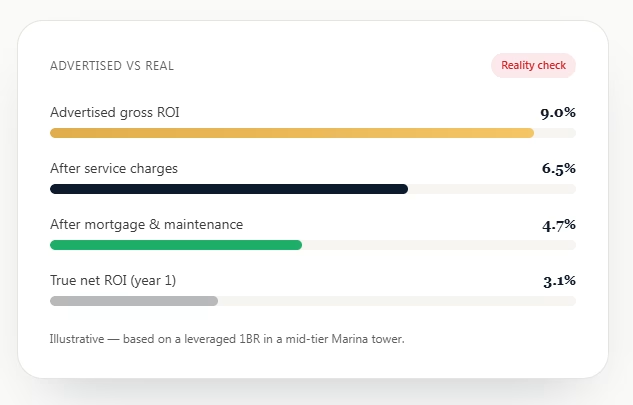
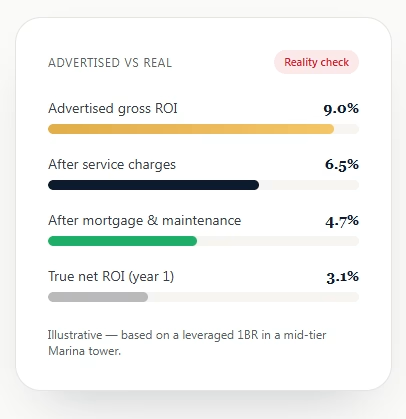
Most advertised returns are gross figures, meaning they do not account for the full cost of ownership. In reality, investors must factor in significant upfront and ongoing expenses, including the 4% Dubai Land Department (DLD) fee, 2% agency commissions, mortgage-related costs (if applicable), and annual service charges. Among these, service charges are often underestimated but can reduce returns by up to 2.5% annually, making them one of the most important variables in determining profitability.
At Dubai ROI Analysis, we go beyond surface-level numbers and focus on true net returns—what you actually earn after all deductions. A comprehensive Dubai Property ROI Analysis evaluates not just rental income, but also vacancy periods, maintenance costs, and building-level performance. Two properties in the same area can deliver completely different results depending on service charges, occupancy rates, and management quality.
- Government fees
- Agency commissions
- Real rental yield vs. advertised yield
- Service charges (the biggest ROI killer)
Realistic cost breakdown (2026)
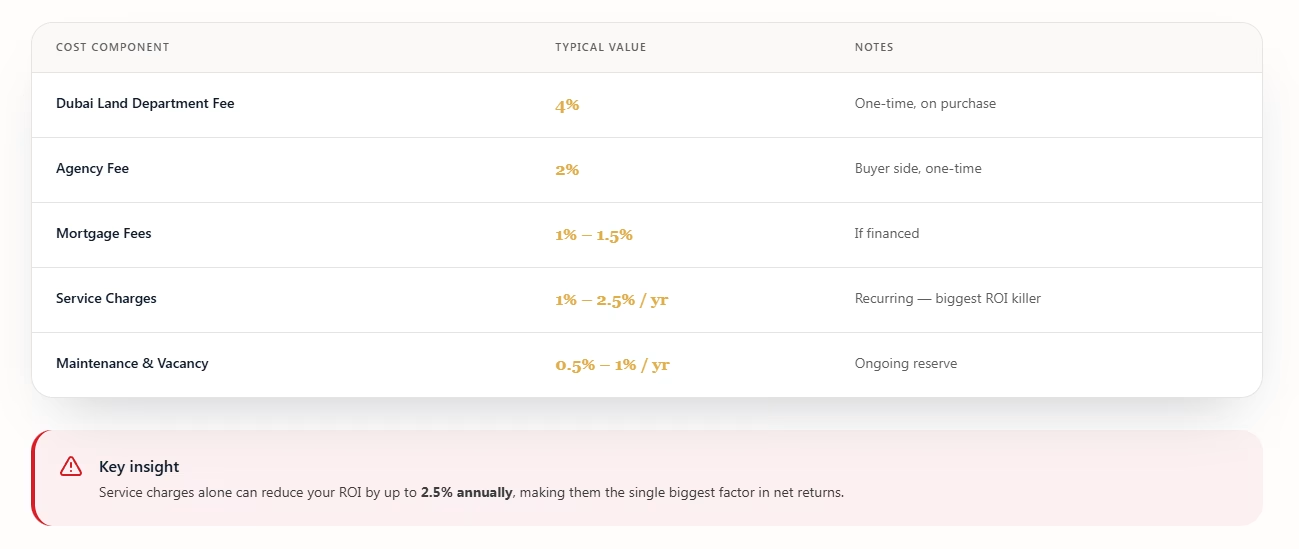
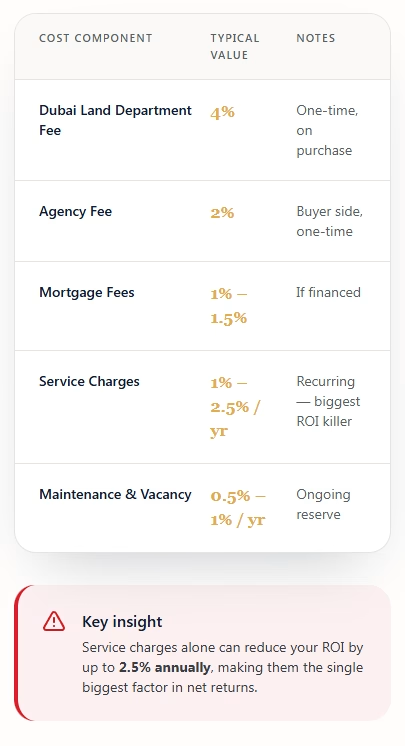
A proper Dubai Property ROI Analysis must begin with a clear understanding of the true cost of buying and holding property. While many investors focus only on rental income and advertised yields, the reality is that multiple cost layers significantly impact your final returns. The most immediate expense is the 4% Dubai Land Department (DLD) fee, followed by a 2% agency commission, both of which are paid upfront at the time of purchase. If financing is involved, mortgage-related fees can add another 1% to 1.5%. These initial costs alone can reduce your effective ROI in the early years, which is why short-term investing strategies often underperform in Dubai’s real estate market.
Beyond the purchase stage, recurring costs play an even more critical role in shaping profitability. Any accurate Dubai Property ROI Analysis must include annual service charges, which typically range between 1% and 2.5% of the property value. These charges vary significantly depending on the building, amenities, and location, and they are often the single biggest factor that reduces net returns. In addition, investors must account for maintenance expenses and potential vacancy periods, which can take away another 0.5% to 1% annually. Ignoring these recurring costs can lead to overestimated returns and poor investment decisions, especially for beginners relying on gross yield figures.
Data-Driven Insights for Smarter Investment Decisions
A strong Dubai Property ROI Analysis goes far beyond basic yield calculations it relies on structured, data-driven research to uncover the real performance of each investment opportunity. Instead of depending on marketing figures or generalized market claims, this approach evaluates thousands of transaction records, rental trends, and building-level performance data to identify true profitability. By analyzing real market behavior, investors can understand which areas consistently deliver strong net returns and which properties are likely to underperform due to hidden costs or weak demand. This level of analysis helps eliminate guesswork and ensures every investment decision is backed by verified data rather than assumptions.
In a competitive market like Dubai, understanding micro-level dynamics is essential for maximizing returns. A detailed Dubai Property ROI Analysis focuses on area-wise and building-specific performance, helping investors compare not just communities, but individual properties within those communities. Factors such as occupancy rates, service charges, tenant demand, and historical price movement all play a critical role in determining long-term ROI. Additionally, investor education is a key component—understanding how the Dubai property cycle works, along with legal frameworks and ownership structures, ensures smarter and safer investment decisions. With forward-looking insights based on supply-demand trends for 2026, investors can position themselves ahead of market shifts and achieve more stable, predictable returns.
Data-Driven Research
Dubai ROI Analysis uses large-scale transaction data and market records to eliminate guesswork and identify real investment performance..
Area-wise ROI
Dubai ROI Analysis breaks down returns at community and building level to reveal true high-performing locations.
Investor Education
Dubai Property ROI Analysis helps investors understand market cycles, legal structures, and long-term wealth-building strategies.
2026 Insights
Dubai Property ROI Analysis provides forward-looking projections based on supply-demand trends to identify future ROI opportunities.
Expert Dubai Property ROI Analysis for Beginners
Dubai has become one of the world’s most attractive real estate investment destinations because of tax-free rental income, high tenant demand, and strong infrastructure growth. This Dubai Property ROI Analysis guide explains how beginners can understand realistic returns instead of relying on marketing numbers alone. Many investors enter the Dubai market expecting high profits but fail to calculate hidden expenses such as DLD fees, agency commissions, service charges, and maintenance costs. A proper investment strategy requires understanding both gross and net ROI before purchasing property. In 2026, smart investors are focusing more on sustainable returns rather than short-term speculation.
Another important reason this Dubai Property ROI Analysis matters is the rapid expansion of Dubai communities and property types. Different locations deliver completely different investment outcomes depending on rental demand, service charges, and occupancy rates. For example, a studio apartment in JVC may produce stronger monthly cash flow than a luxury villa in Palm Jumeirah. While luxury villas often appreciate more over time, they also come with significantly higher holding costs and longer vacancy risks. Understanding these differences helps beginners avoid common investment mistakes.
The Dubai market is also becoming more competitive as international investors continue entering the UAE. This means investors must compare communities carefully instead of assuming every property produces high ROI. A strong Dubai ROI Analysis includes rental yield, appreciation potential, exit strategy, and future infrastructure growth. Investors should also evaluate upcoming metro developments, tourism growth, and community demand trends before buying. These factors directly impact long-term profitability and resale value in Dubai’s evolving property market.
Understanding Gross vs Net Dubai Property ROI Analysis
One of the biggest mistakes beginners make during a Dubai Property ROI Analysis is focusing only on gross rental yield. Gross ROI usually looks attractive because developers and agents often highlight annual rental income without subtracting expenses. However, real profitability depends on net ROI after all deductions are included. Investors who ignore these costs may discover their actual returns are far lower than expected. This is why calculating realistic net income is essential before purchasing any Dubai property.
A professional Dubai Property ROI Analysis should include deductions such as the 4% Dubai Land Department fee, 2% agency commission, annual service charges, maintenance costs, and property management fees. In some luxury buildings, service charges alone can reduce ROI by up to 2.5%. For example, a Downtown Dubai apartment may generate strong rental income but lose significant profit through expensive building maintenance fees. Meanwhile, communities like JVC often provide lower service charges and stronger net rental performance. This difference can dramatically affect long-term cash flow.
Another important factor in a realistic Dubai ROI Analysis is financing structure and occupancy rate. Investors using mortgages must also consider interest payments when calculating true returns. Vacancy periods between tenants can further reduce annual profitability if not planned carefully. Properties in high-demand rental communities generally maintain stronger occupancy and more predictable income. This is why experienced investors prioritize net returns instead of relying only on advertised gross yield percentages.
Service Charges and Community Comparison in Dubai Property
Service charges have become one of the most important factors in modern Dubai Property ROI Analysis because they directly affect investor profit margins. Many beginner investors overlook these charges during purchase decisions and later realize their rental income is significantly reduced. Luxury communities often advertise premium living experiences, but higher building maintenance fees can reduce net returns dramatically. This is especially important in 2026 as service charges continue rising across many upscale developments. Investors must compare communities carefully before making decisions.
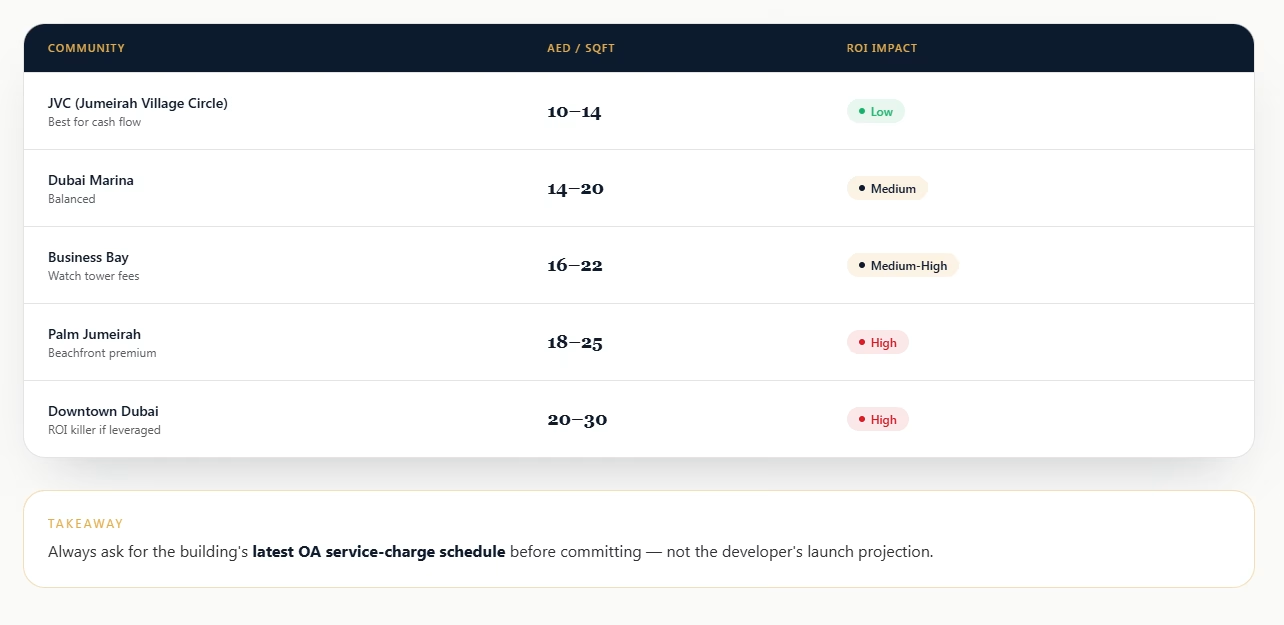
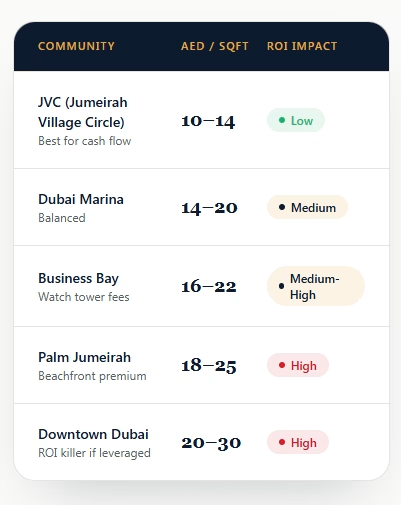
A smaller apartment in JVC can often outperform a luxury property in Downtown Dubai when calculating actual cash flow. Investors looking for passive income usually prefer lower-cost communities because they produce more stable monthly profit. Luxury properties may still deliver strong long-term appreciation, but they require larger capital investment and higher ongoing expenses. Choosing the right community depends on investment goals, risk tolerance, and holding strategy.
Property Type Comparison in Dubai Property ROI Analysis
Property type plays a major role in determining profitability during a Dubai Property ROI Analysis because rental demand differs significantly between apartments, villas, and townhouses. In Dubai, studio and one-bedroom apartments generally deliver higher rental yields because they are affordable and attract a larger tenant pool. Young professionals, expatriates, and small families often prefer smaller units in accessible communities. This creates higher occupancy rates and lower vacancy risk. Investors focused on monthly cash flow usually prefer compact apartments for this reason.
A practical Dubai Property ROI Analysis example is comparing a studio apartment in JVC with a luxury villa in Palm Jumeirah. A JVC studio purchased for AED 500,000 may generate AED 40,000 annual rent, resulting in nearly 8% gross yield. Service charges remain relatively low, allowing investors to maintain strong net returns. Meanwhile, a Palm Jumeirah villa worth AED 15 million may produce AED 700,000 annual rent, but high maintenance and service expenses reduce net profitability significantly. Luxury villas also face longer vacancy periods due to a smaller tenant market.
Another important factor in a successful Dubai ROI Analysis is balancing rental yield with capital appreciation. Luxury villas in Palm Jumeirah may appreciate strongly over time due to limited waterfront supply and global demand. However, apartments in communities like JVC often generate better immediate cash flow and faster return recovery. Investors must decide whether they prioritize monthly income or long-term appreciation. Understanding this balance is essential for building a sustainable Dubai property portfolio.
Optimal Hold Period in Dubai Property ROI Analysis
The holding period is one of the most overlooked factors in a professional Dubai Property ROI Analysis because short-term investing often reduces profitability. Many beginners expect quick profits within one or two years, but Dubai real estate usually performs best over medium-term cycles. Initial transaction costs such as DLD fees, agency commissions, and furnishing expenses can take several years to recover. This is why experienced investors typically recommend holding property for at least 3–5 years. This strategy allows investors to benefit from both rental income and capital appreciation.
A smart Dubai Property ROI Analysis also considers market timing and infrastructure development. Communities connected to new metro expansions or major commercial projects often experience gradual appreciation over several years. Investors who hold properties during these development phases usually achieve better profitability than short-term speculators. Selling too early may result in losing money after transaction costs are deducted. Patience is often one of the most important factors in successful Dubai real estate investing.
Another reason the 3–5 year holding strategy works well in Dubai ROI Analysis is market stability. Dubai’s property market experiences growth cycles influenced by tourism, population expansion, and global investment trends. Investors who remain through multiple market phases often benefit from stronger long-term appreciation. Rental income also helps offset holding costs during slower periods. This creates a more balanced and lower-risk investment strategy for beginners entering the Dubai market.
Selling Strategy and Exit Planning in Dubai
Most real estate guides focus only on buying, but selling strategy is equally important in a successful Dubai Property ROI Analysis. Investors must understand when to exit the market and how resale timing affects overall profitability. Selling too early can reduce returns because transaction fees and commissions consume a large portion of profit. On the other hand, holding too long in a slow-performing property may reduce opportunity for better investments elsewhere. Planning an exit strategy from the beginning helps investors make smarter decisions.
A proper Dubai Property ROI Analysis includes resale demand, future community growth, and market competition. Properties located near metro stations, schools, and business hubs generally attract stronger resale demand. Buyers should also analyze future supply pipelines because oversupply may affect resale prices in certain areas. Communities with balanced development and consistent tenant demand often provide more stable long-term resale value. This makes location selection extremely important for profitable exits.
Another key part of Dubai ROI Analysis is understanding market sentiment during the selling phase. Investor demand often increases during periods of economic growth and infrastructure expansion. Selling during high-demand cycles may significantly increase profitability compared to slower market periods. Experienced investors track market trends carefully instead of relying on emotional decisions. Combining strong rental income with strategic selling timing creates the best overall return potential in Dubai real estate.
Best Beginner Strategy for Dubai Property ROI Analysis
For beginners entering the Dubai market, the safest approach in a Dubai Property ROI Analysis is starting with affordable high-demand communities. Areas like JVC, Dubai Silicon Oasis, and Arjan often provide strong rental income with lower financial risk. These communities attract stable tenant demand from working professionals and families. Smaller apartments also require lower investment capital compared to luxury villas or penthouses. This allows beginners to enter the market more comfortably.
A beginner-focused Dubai Property ROI Analysis should also prioritize cash flow stability instead of speculative appreciation. Properties with strong occupancy and low service charges usually perform better over time. Investors should avoid purchasing purely based on luxury branding or marketing promises. Instead, they should compare net ROI, maintenance costs, and rental demand carefully before investing. This reduces risk and improves long-term profitability.
Another important lesson in Dubai ROI Analysis is diversification. Instead of investing all capital into one luxury property, many experienced investors prefer multiple smaller units across high-demand communities. This spreads risk while increasing rental stability and tenant diversification. Beginners who follow this strategy often build stronger portfolios over time. Careful planning, patience, and realistic ROI calculations remain the keys to long-term success in Dubai real estate investment.
Frequently Asked Questions
1. What is Dubai Property ROI Analysis?
It is the process of calculating the real return on a Dubai property after deducting all costs like fees, service charges, and maintenance to find true net profit.
2. Why is net ROI lower than advertised ROI in Dubai?
Because advertised ROI ignores expenses such as DLD fees, agency commissions, and service charges, which significantly reduce actual returns.
3. Which cost has the biggest impact on ROI?
Service charges have the biggest impact, as they are recurring and can reduce ROI by up to 2.5% annually depending on the building.
4. Why is net ROI important?
A proper Dubai Property ROI Analysis includes DLD fees, service charges, maintenance, and agency costs to calculate real profit.
5. How long should I hold Dubai property?
Most experts recommend 3–5 years in a Dubai Property ROI Analysis to recover transaction costs and maximize profit.
Conclusion
A professional Dubai Property ROI Analysis requires much more than checking advertised rental yield figures. Investors must calculate net returns after deducting DLD fees, agency commissions, service charges, maintenance expenses, and vacancy risks. Communities like JVC and Dubai Silicon Oasis often provide stronger net ROI than luxury districts because of lower operating costs and stronger occupancy. Understanding these differences helps beginners avoid unrealistic expectations and poor investment decisions.
This detailed Dubai ROI Analysis also shows the importance of choosing the right property type, holding strategy, and exit plan. Studio apartments may generate stronger monthly cash flow, while luxury villas may deliver long-term appreciation. Investors who hold properties for 3–5 years usually recover transaction costs more effectively and achieve better profitability. With careful planning and realistic expectations, Dubai continues to offer some of the world’s best real estate investment opportunities for beginners and experienced investors alike.

Our platform provides off-plan and resale opportunities, joint ventures, developer partnerships, and comprehensive property services.